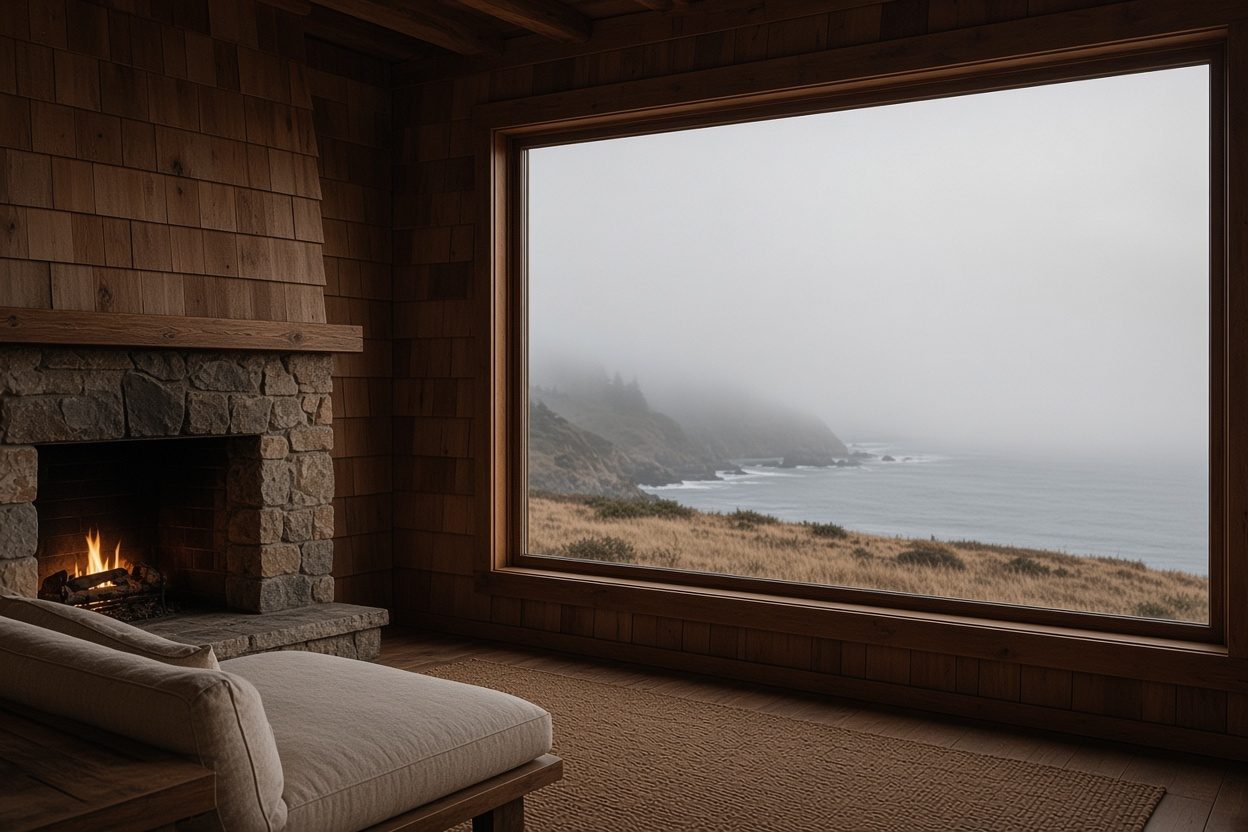
I bought the house because the man who owned it had stopped listening to the ocean and started listening to the radio. The chart room faced west. The sets faced the chart room. When he left, in the spring of 1978, he took the radios and left the windows, which I have always thought was the better half of the bargain.
Mere is one storey of cedar on a headland the highway only glances at. The roof is metal, and louder than the sea when it rains. That is a kindness. You always know what the day is doing without getting up to check. There are twelve rooms if you count the way a house counts — the pantry, the linen press, the place under the stairs where the charts used to live — and three if you count the way a guest counts. We speak of the three.
People write and ask what there is to do. There is a path through the grass to a place where the cliff takes the wind out of your coat. There is a tub on the deck that holds two, or one person and a book that can survive a splash. There is dinner at seven, at one table, and if you are late the soup is not. I do not keep a list of wineries. The coast is not a corridor between appointments.
What I added was linen, a kitchen large enough for an argument, and a rule about televisions.
June Alden
The Chart Room is the old radio room. In the afternoon the west glass lays a bar of light across the desk, and the bar moves faster than you think. People try to work there. The light wins. Cypress is smaller and looks into the trees. Guests who need the ocean in the first minute are unhappy for an hour, and then they are fine, which is the usual length of a principle. The Loft sits over the kitchen. You hear the bread. You hear me speaking to the bread. Both are included.
I closed the road to itineraries the second year. A couple arrived with a schedule laminated at a print shop in town: sunrise, a named rock, a pottery studio, us, in that order, with the studio given forty minutes. They were kind about it. I was not. The house is a place you stay inside a weather system, not a stop you tick. If you want a view, you walk to it, and you walk back when your hands are cold. The kettle is on. It is always on. That is the whole amenity list I am willing to print.
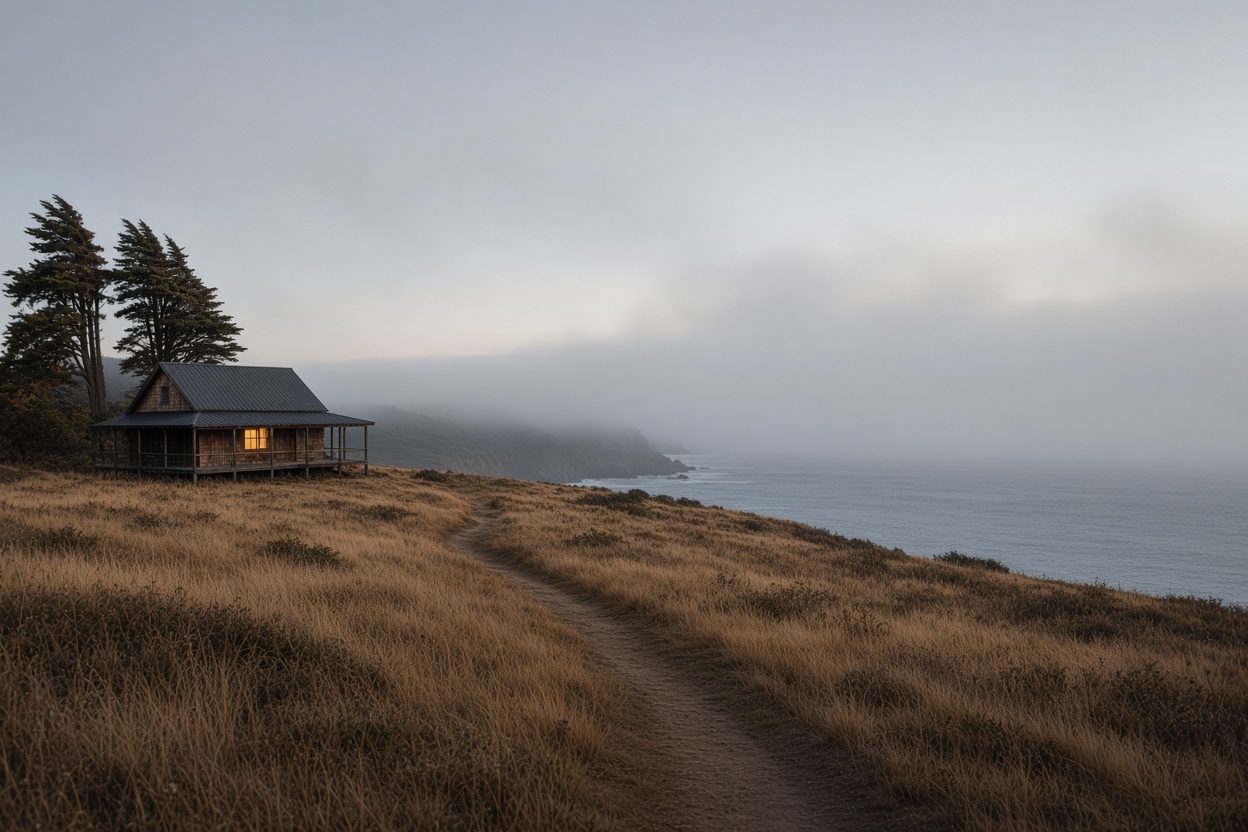
We close in December. The road gets theatrical, and I would rather read. November is the honest month: the grass has given up being green, the cypress keep their own counsel, and the metal roof practices the rain before the rain arrives. If you come then, bring a sweater you actually like. The house is warm. The porch is not a suggestion, and it is not enclosed, and that is the point of a porch.
The man with the radios drove back once, in 1986, and stood in the chart room as if the dials might still be there. He looked at the desk, then at the water, then at me. “You took the interesting part out,” he said. I told him the interesting part had been the window the entire time. He stayed for the soup. He did not ask to see the radios, which I had never had.